BRIGHTNESS
Lumens, not watts
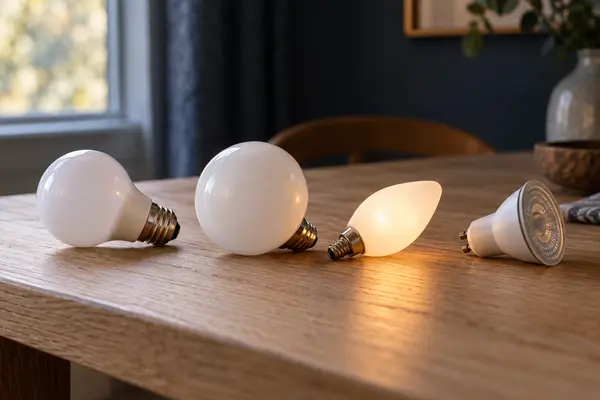
Lumens measure the light that comes out. Watts measure the power going in, which LEDs need far less of.
Find your lumens doodlelights
A PLAIN-ENGLISH BULB GUIDE
LED bulbs changed what the numbers on the packet mean.
Find your lumens
LUMENSnot watts
A modern bulb uses a fraction of the power of the old ones, so watts no longer tell you how bright it will be. Lumens do. Add the colour of the light, how true it makes colours look, and whether it flickers, and you have everything worth checking.
Plain English, with the sources linked.
At a glance
up to 80% less
LED power use against halogen
When it announced the end of halogen sales, the UK government said LED bulbs use up to 80% less power than halogens and last five times longer.
ENERGY · GOV.UK 2021
CRI 80 or more
Minimum colour rendering index
From 1 September 2021, most general light sources must have a CRI of at least 80. Outdoor bulbs and some very powerful lamps are exempt.
COLOUR · ECODESIGN 2021
TWO NUMBERS WORTH KNOWING
Since September 2021 the rules have asked
more of every bulb on the shelf.
The same rules cap visible flicker and the stroboscopic effect at full power, so a cheap bulb should not shimmer the way some early LEDs did.
A QUICK LUMENS FINDER
Pick the wattage of the filament bulb you are replacing to see roughly how many lumens to look for. The figures come from the Australian Government’s Energy Rating guide to traditional incandescent lamps.
These are rounded guide values. Bulbs of the same lumens can still look different if their colour temperature differs.
THE SHORT ANSWER
UK rules say what the box must show,
and lumens must be printed largest.
BRIGHTNESS
Lumens measure the light that comes out. Watts measure the power going in, which LEDs need far less of.
Find your lumensCOLOUR OF LIGHT
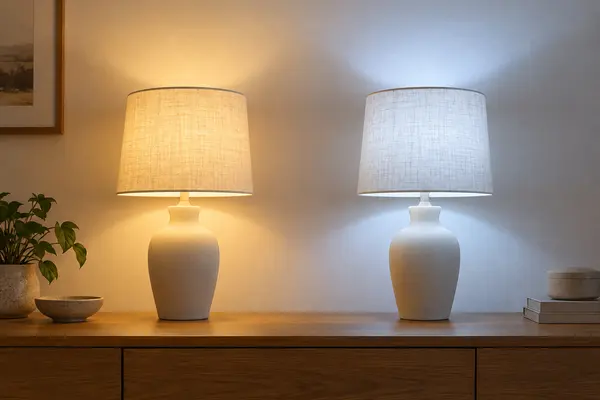
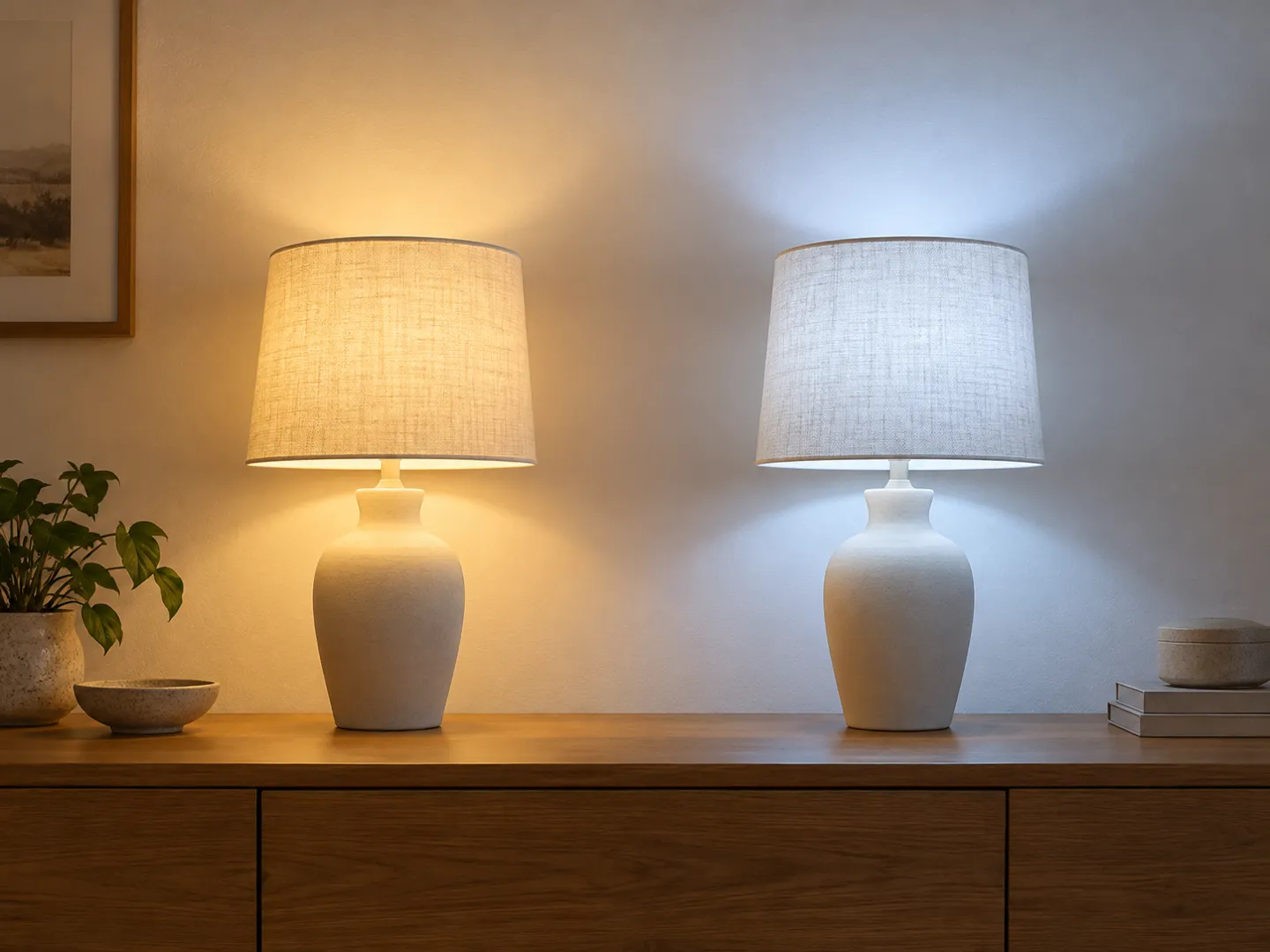
The colour temperature tells you how warm or cool the white looks. Lower numbers look warmer.
What else is on the box?TRUE COLOURS
The colour rendering index shows how natural colours look under the bulb. Most bulbs must now reach 80.
See the rules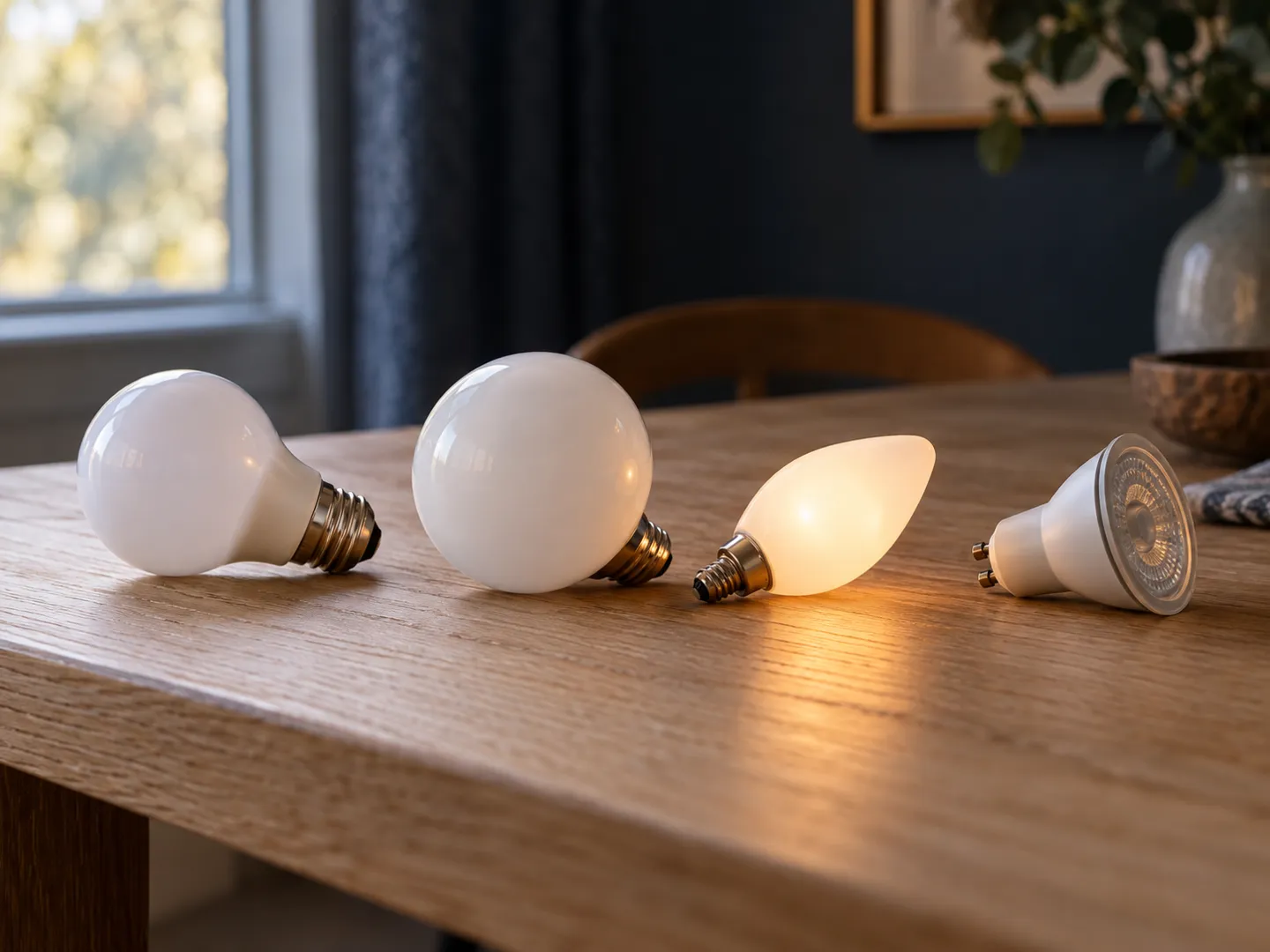
BEFORE YOU BUY
Use the finder above: about 800 lumens replaces an old 60 W bulb. Ignore the wattage when judging brightness.
Look for the kelvin figure. Pick a lower number for a warmer, cosier light and a higher number for a cooler, crisper one.
Most new bulbs must reach CRI 80. If you want colours to look their most natural, compare the figure printed on the box.
If the bulb goes on a dimmer switch, look for the dimming statement before you buy, and check the cap type fits your fitting.
BULB FACTS
UK ecodesign rules require the useful light output in lumens to be printed in a font at least twice as large as the power in watts.
The correlated colour temperature must be shown on the box, rounded to the nearest 100 kelvin, or as the range a smart bulb can be set to.
LED packaging must give an L70B50 lifetime in hours, a standard way of stating how long the light output lasts.
If a bulb cannot be dimmed, or works only with certain dimmers, the box must say so.
The energy label moved to an A to G scale without A+, A++ or A+++, so very few bulbs reach A. A B or C bulb can still be a good buy.
QUICK QUESTIONS
Short answers to the questions people ask most.
An old 60 W filament bulb gave about 800 lumens, according to the Australian Government’s Energy Rating guide. A 40 W bulb gave about 470 lumens and a 100 W bulb about 1,500.
The UK government ended the sale of most halogen bulbs from 1 September 2021, and fluorescent lights were removed from shelves from September 2023. It said LEDs use up to 80% less power and last five times longer than halogens.
It describes how warm or cool the white light looks, in kelvin (K). Under UK ecodesign rules the box must state it, rounded to the nearest 100 K. A lower number looks warmer and more yellow; a higher number looks cooler and bluer.
CRI, the colour rendering index, measures how a light source affects the way colours of objects look. Since 1 September 2021 most general-purpose bulbs must have a CRI of at least 80, and the box has to show the figure.
Bulbs moved to a new A to G scale that did away with the A+, A++ and A+++ classes. The government said the rescale makes very few bulbs eligible for an A rating, leaving room for better products.
Sources
A BRIGHT NAME
doodlelights.com is part of the DoodleSale portfolio. It isn't in an auction right now, but you can ask about leasing it.